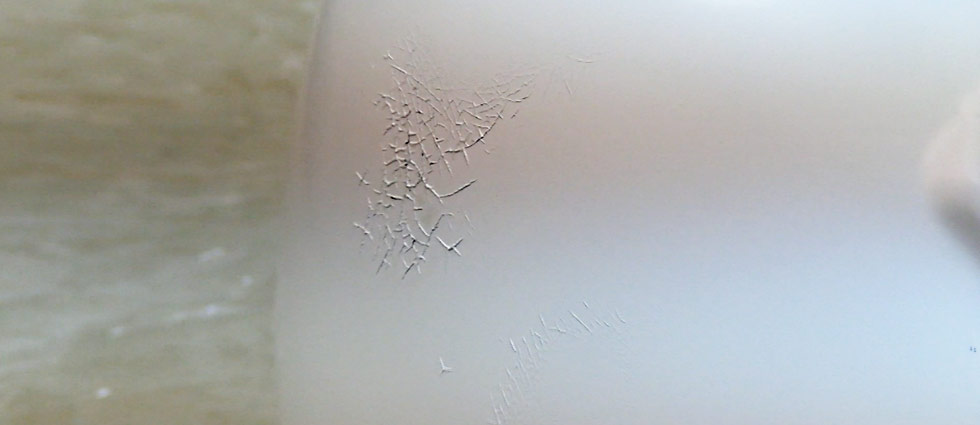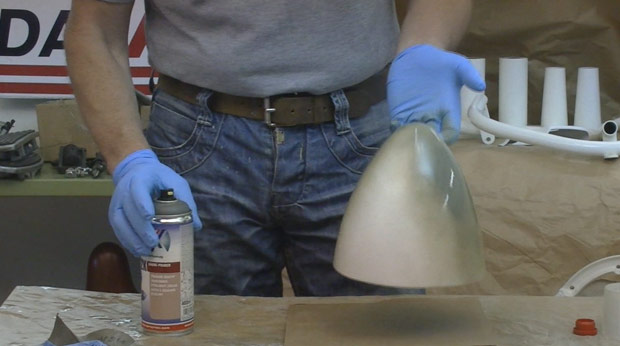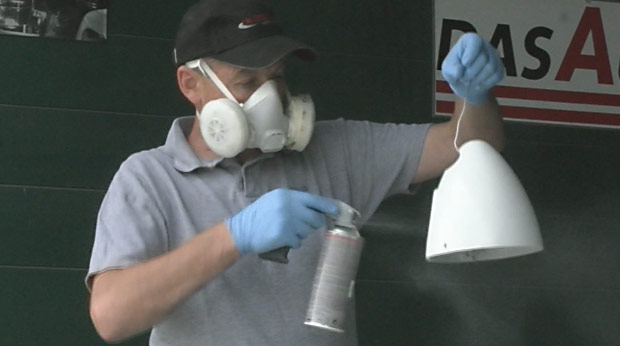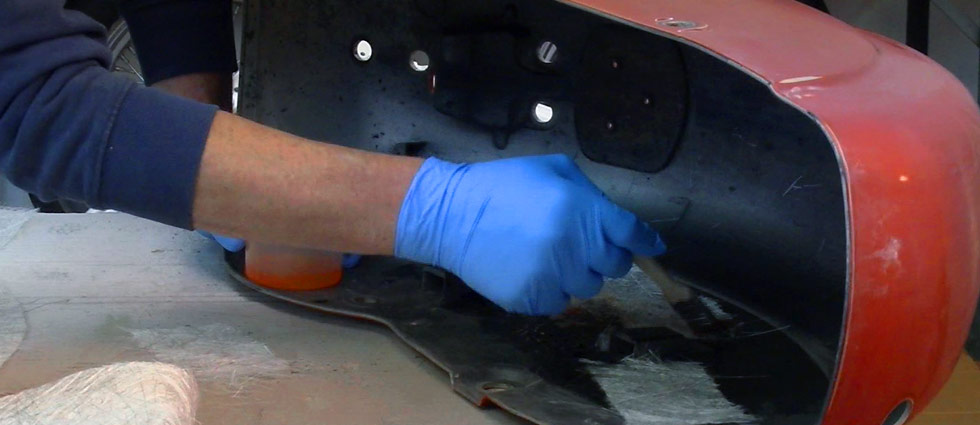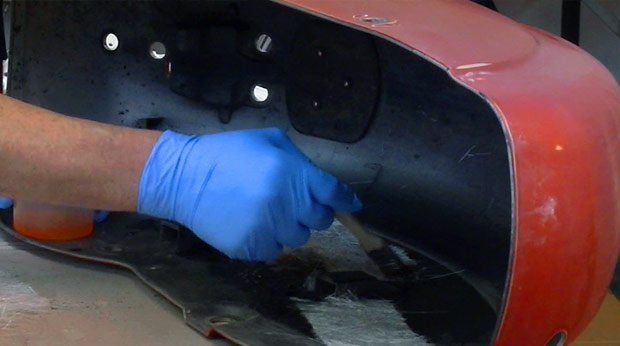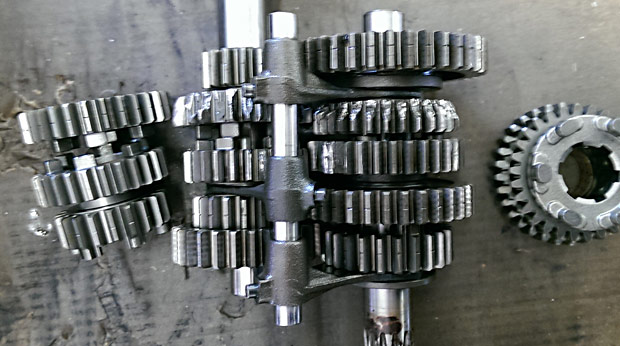
The Classic: Rust on Fender and Door Sill

▶️ The Classic: Rust on Fender and Door Sill

Repair typical rust spots on wheel arch and sill in 6 steps

▶️DifficultyMedium
⏱️Time5-7 Hours
▶️Cost~€200
▶️Savings€1800

Complete Video Tutorial (6 Parts)

The Problem

Ugly, highly visible rust spots on the lower edge of the fender and door sill on both sides. This repair can cost up to €2,000 at a body shop!

6 Steps to Success:

1

Preparation

Lift vehicle, remove wheels, inner fender, door. Loosen fender. Mask everything that shouldn’t be painted – interior, brake parts, adjacent panels.

2

Remove Rust

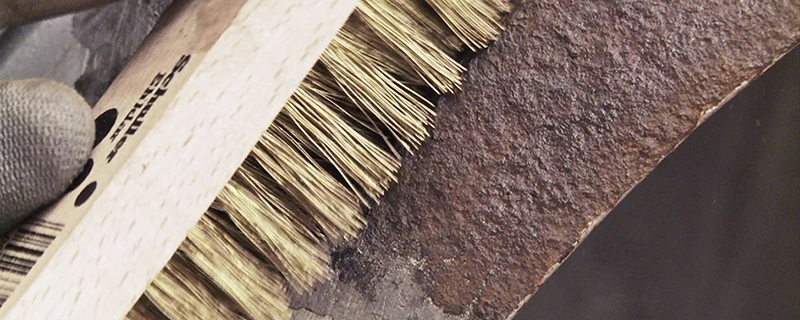
Completely remove all rust with wire brush, rust disc, and sandpaper. All rust must be removed!

3

Prime & Sand

Apply 2K epoxy primer in 2-3 coats. After 12h, wet sand with P800. Apply stone chip protection on lower areas.

4

Base Coat

Shake spray can 2 minutes. Apply multiple thin coats from 30cm distance. First coat thin (adhesion), second coat full coverage.

5

Clear Coat

After 30 minutes, apply 2K clear coat in 2-3 thin layers for UV protection and gloss.

6

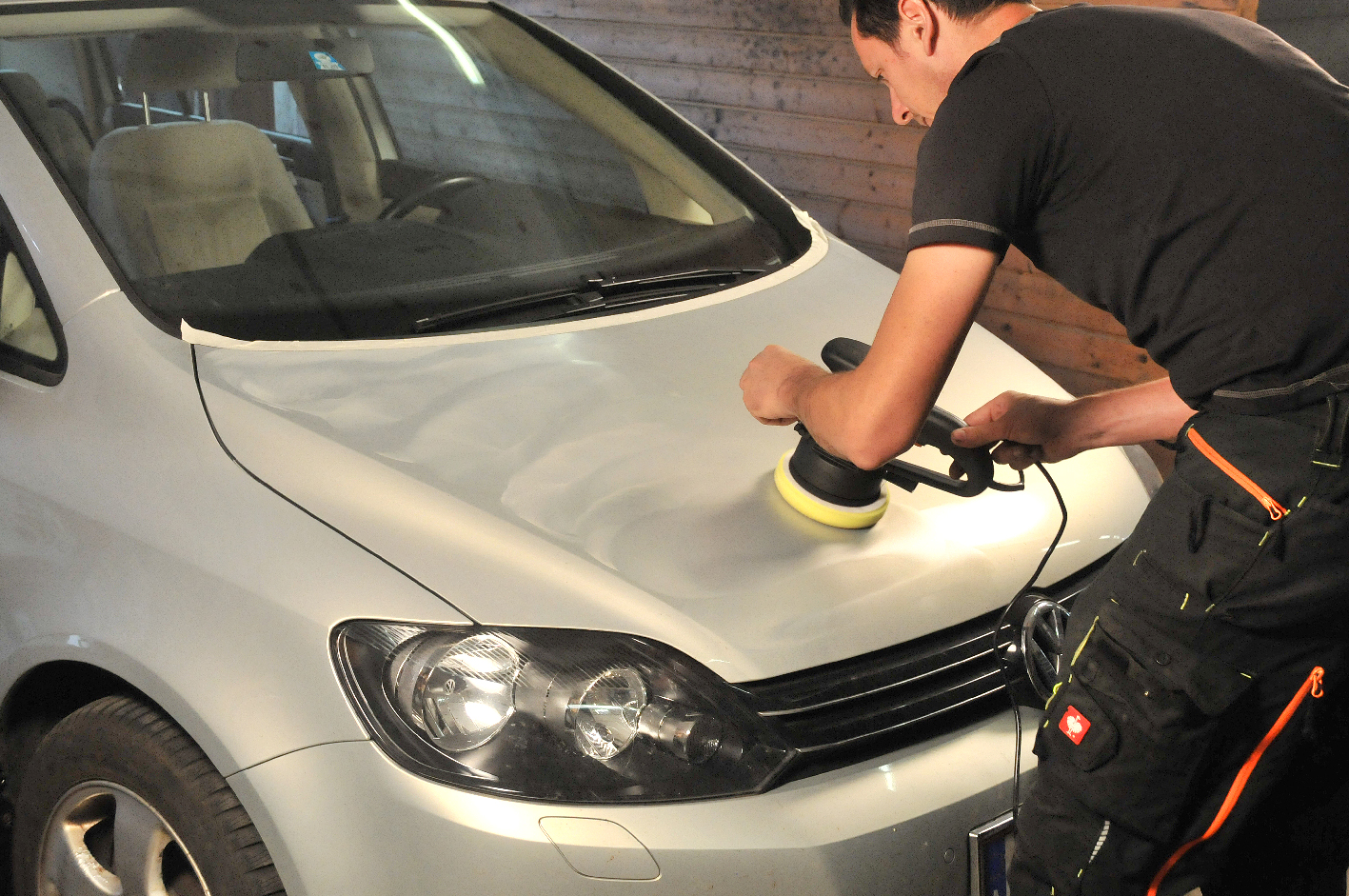
Polish & Reassemble

After curing, polish blending area. Reassemble all parts – done!

▶️ Why DIY?

You don’t need to be a pro! Watch our video and you’ll see – you can do this too. Save €1800!
#12: The reward

#12: The reward

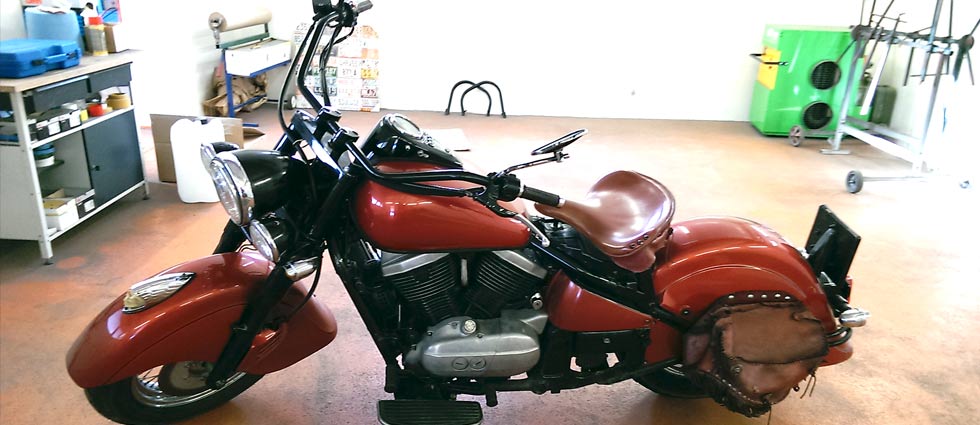
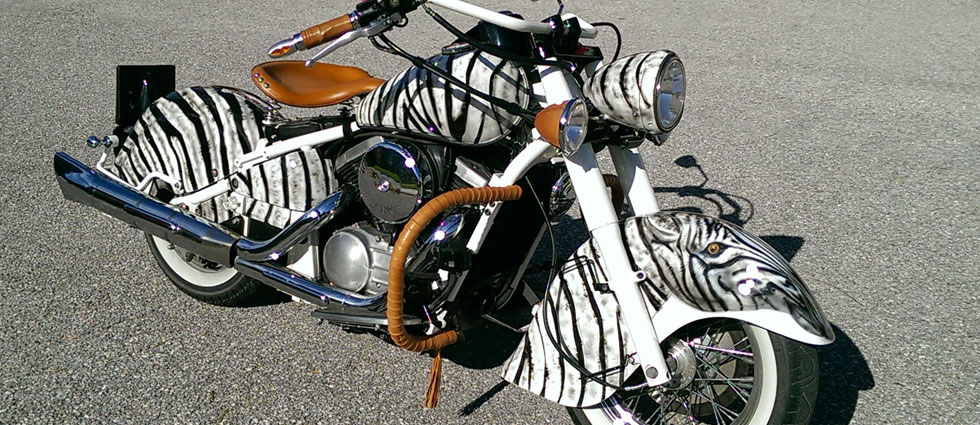
DONE! The Kawasaki Drifter shines in new splendor

EPISODE
12 of 12

DIFFICULTY
Enjoy!

TIME REQUIRED
Done!

Video Tutorial

The Result

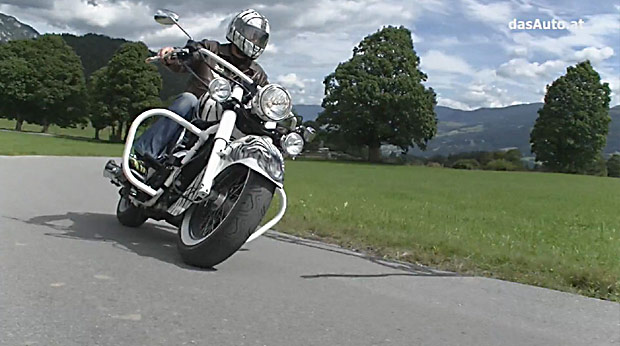
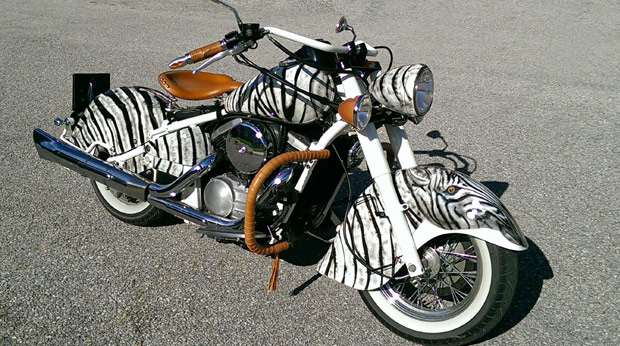
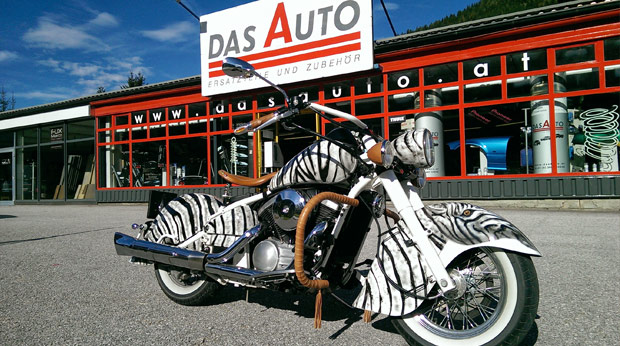
After months of hard work, it’s finally done: the Kawasaki VN800 Drifter shines in new splendor!

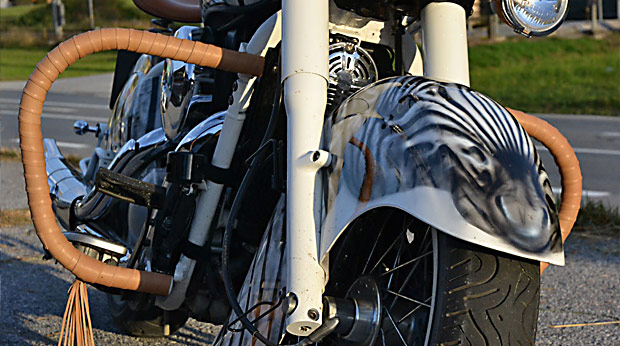
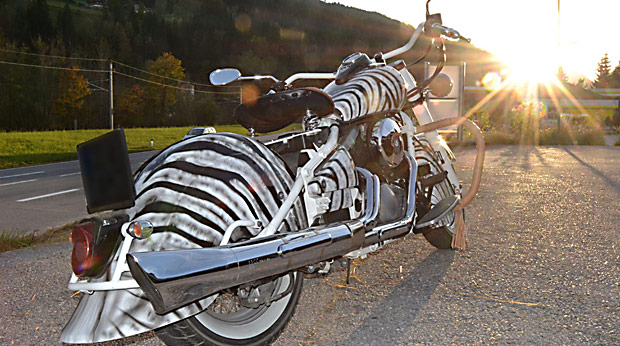
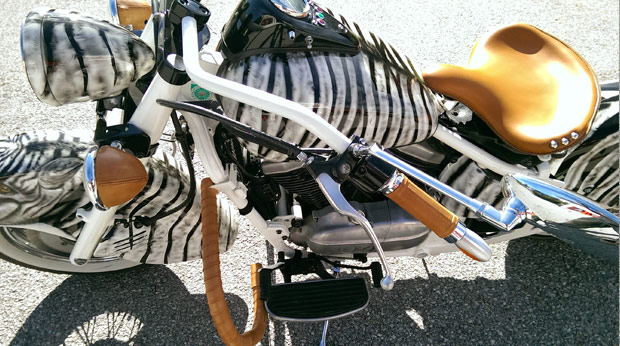
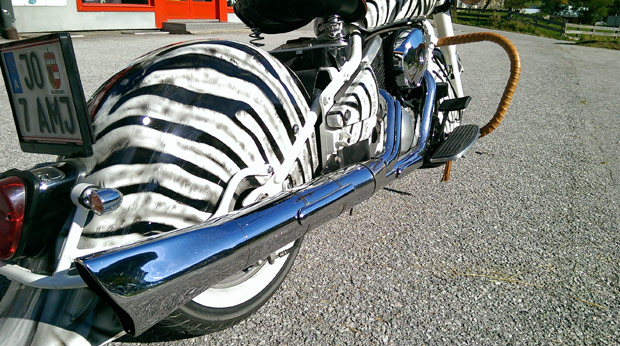
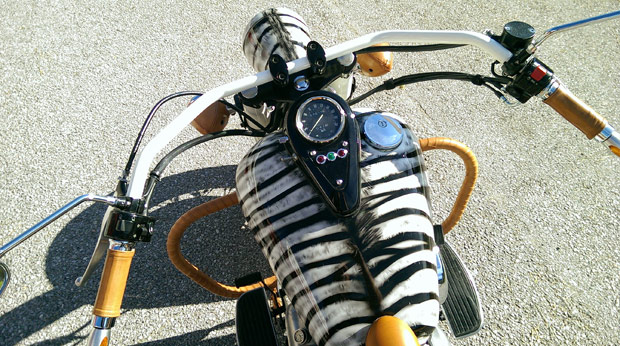
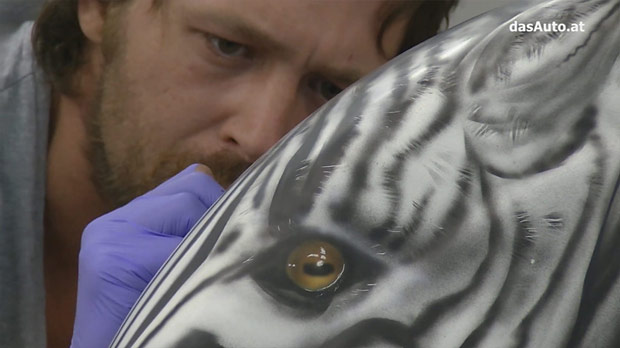
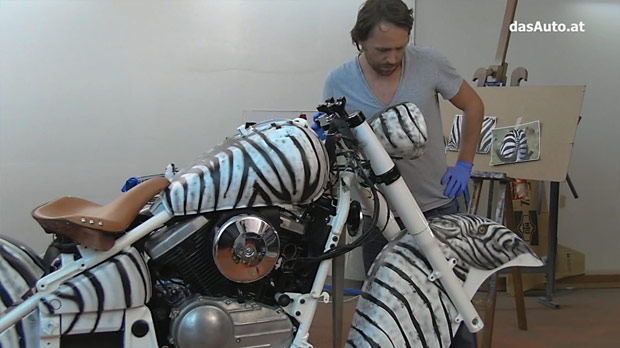
The result: a unique show bike with hand-painted zebra airbrushing. From rusty barn find to award-winning custom—that’s the magic of DIY!

What We Achieved:

Complete restoration

Frame, engine, all body parts—everything was completely restored.

Custom paint

Unique zebra airbrush design—a one-of-a-kind show bike.

Show winner

The bike won awards at custom bike shows—the ultimate validation!

DIY success

Proof that with the right products and knowledge, anyone can achieve professional results.

Your Turn!

You’ve seen how it’s done. Now it’s your turn! With the right products from our shop and these guides, you can transform your motorcycle too.

#09: Zebra Airbrush

#09: Zebra Airbrush

A work of art on two wheels—the unique zebra look is created


EPISODE
9 of 12

DIFFICULTY
Expert

TIME REQUIRED
2-3 days

Video Tutorial

Recommended SET

Airbrush Color SET

Go to Shop →

Work Steps:

1

Design

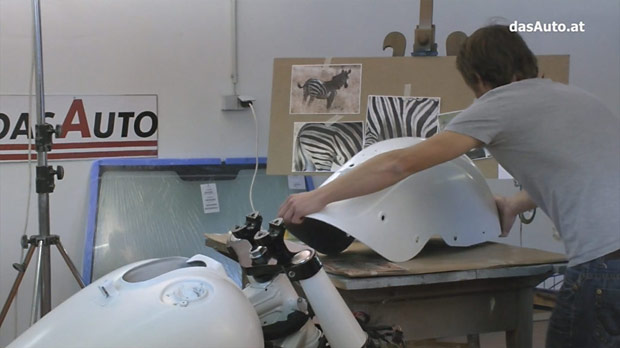
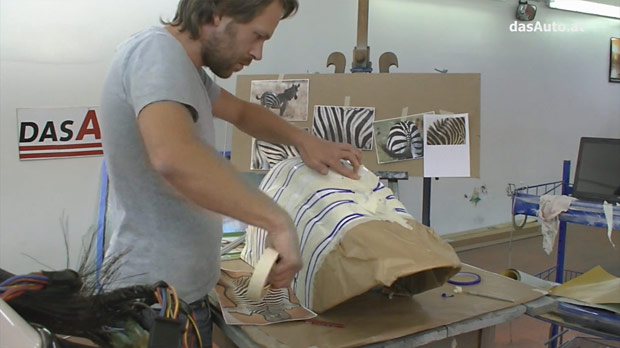
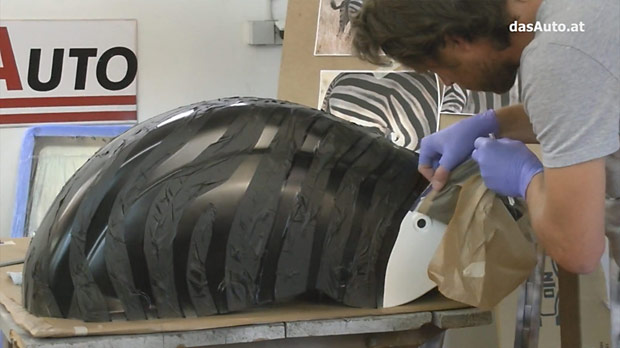
Create the zebra pattern design. Mark the lines on the tank with masking tape.

2

Masking

Cover all areas that should not be painted. Precise masking is essential!

3

Airbrushing

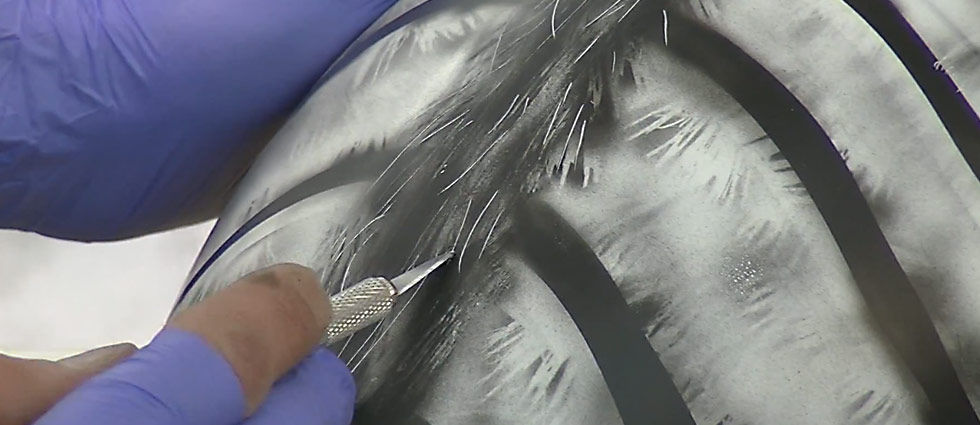
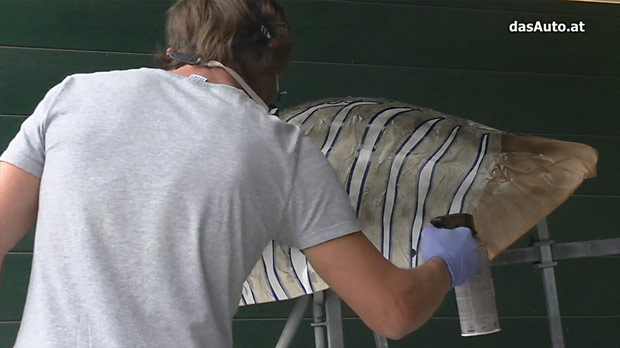
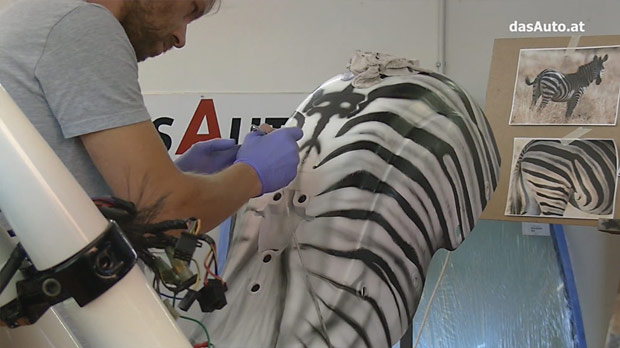
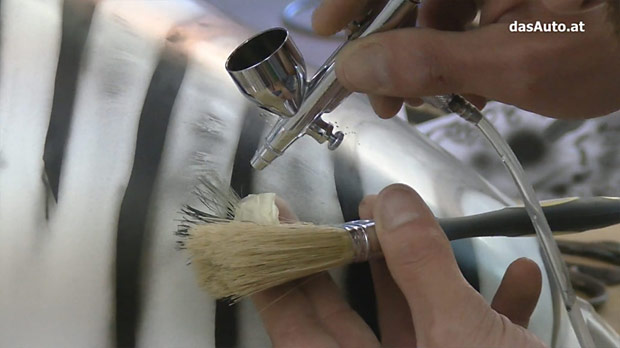
The zebra pattern is applied using an airbrush and stencils. Each line is sprayed by hand—precision work!

4

Details

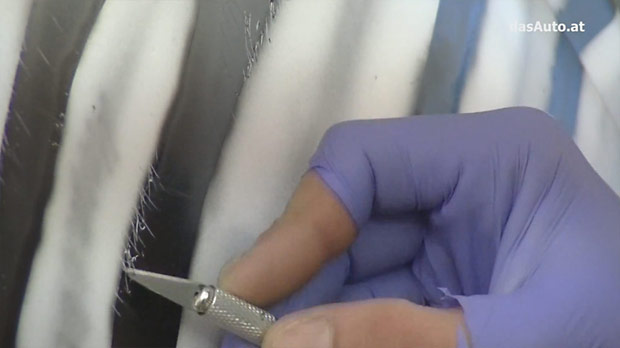
Fine details and transitions are hand-painted. Allow each layer to dry before the next.

The Artwork

Now it gets artistic! The tank receives its unique zebra pattern. This requires a steady hand, patience, and experience with airbrush technique.

Pro Tip

Practice the pattern on cardboard first. Each zebra stripe should be slightly different—that’s what makes it look natural.

#08: Assembly 1

#08: Assembly 1

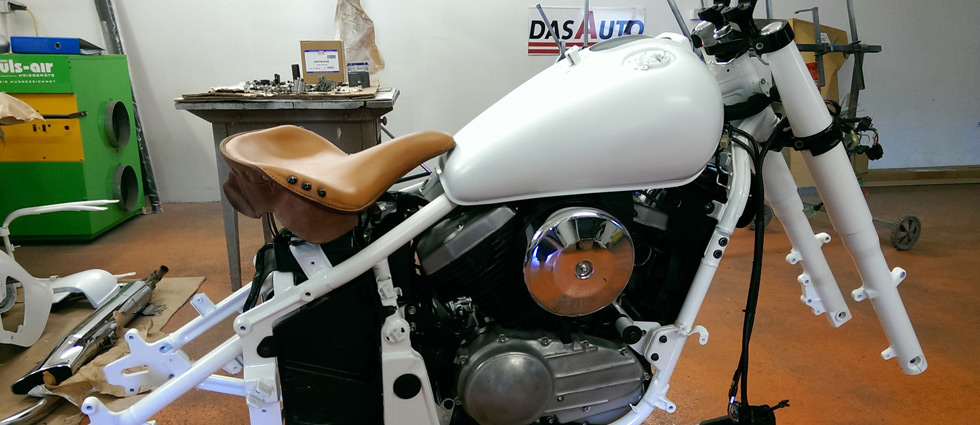
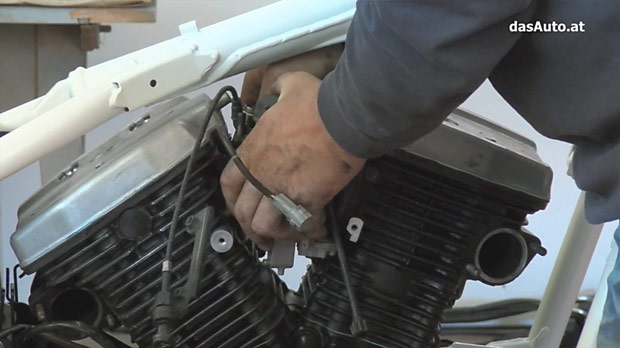
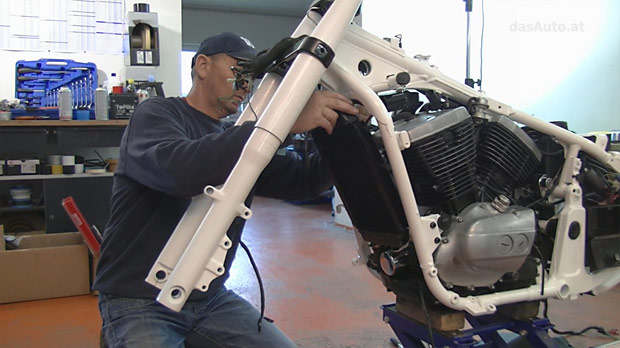
Finally! The frame and engine are reunited


EPISODE
8 of 12

DIFFICULTY
Medium

TIME REQUIRED
1 day

Video Tutorial

Work Steps:

1

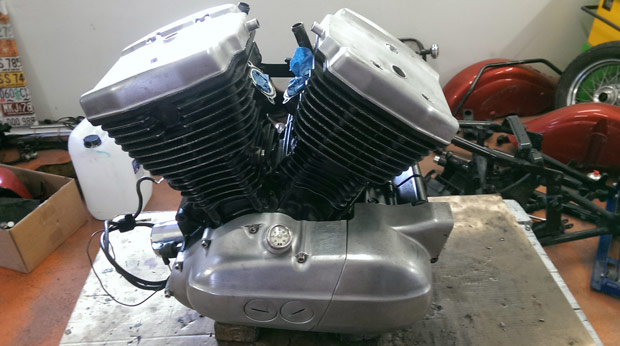
Engine installation

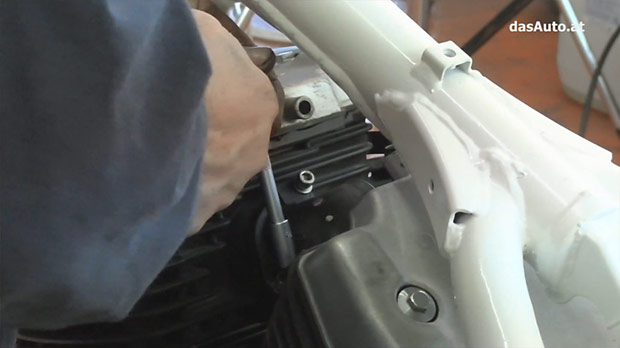
Carefully insert the engine into the frame. Check the engine mounts!

2

Wheel mounting

Install front and rear wheels. Check bearing play and brake discs.

3

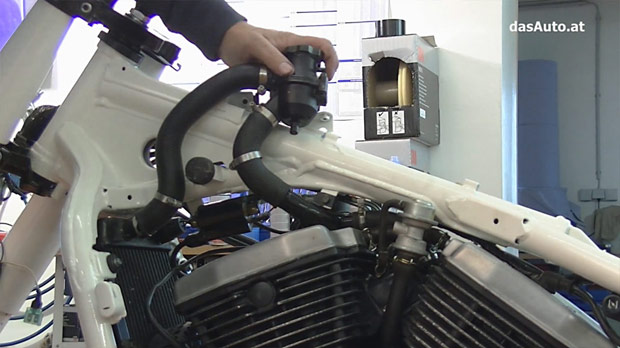
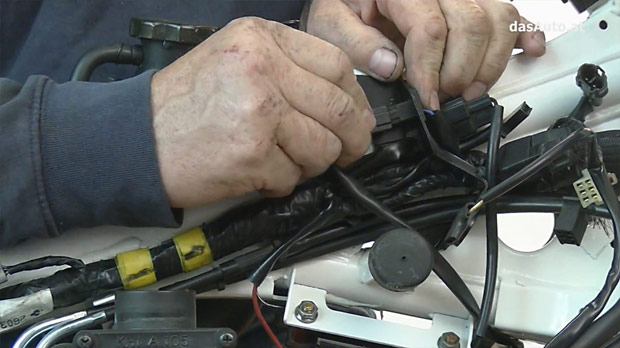
Connections

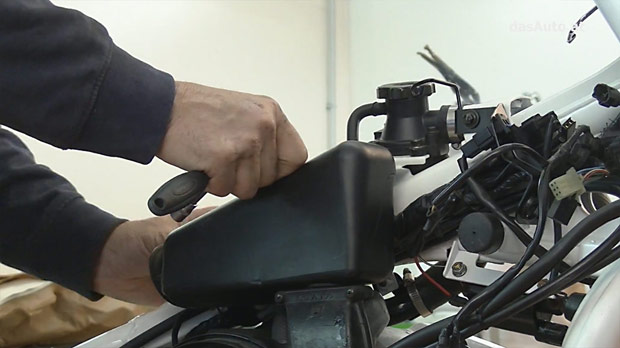
Brake lines, fuel lines, and electrical systems are connected.

4

Check

Check all connections for leaks and proper fit.

The Goal

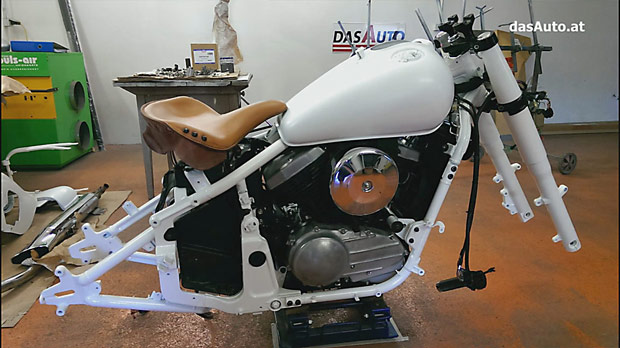
The moment we’ve been waiting for! After all the painting work, the motorcycle slowly comes back together. Engine and frame are finally reunited.

Pro Tip

Use new gaskets and seals everywhere. Old rubber parts can crack and cause leaks.

#06: Restore attachments

#06: Restore attachments

Small parts, brackets, and attachments are refurbished


EPISODE
6 of 12

DIFFICULTY
Medium

TIME REQUIRED
1-2 days

Video Tutorial

Recommended SET

Paint & Primer SET

Go to Shop →

Work Steps:

1

Cleaning

Thoroughly clean all small parts. Oil, grease, and old dirt must be completely removed.

2

Rust removal

Remove rust with wire brush, sandpaper, or rust converter.

3

Priming

Treat metal parts with rust-proof primer. Use 2K filler for visible parts.

4

Painting

Paint with matching color or heat-resistant paint for engine parts.

The Goal

While the main parts are drying, we restore all the small parts. Brackets, covers, and accessories are cleaned, primed, and painted.

Pro Tip

Use wire hooks to hang small parts for painting. This way you can spray all sides at once.

#05: Paint pulls up

#05: Paint cures

Pure excitement—the fresh paint develops its full shine


EPISODE
5 of 12

DIFFICULTY
Easy

TIME REQUIRED
Wait!

Video Tutorial

The Magical Moment

One of the best moments in any paint job: the clear coat cures! Within minutes, the matte surface transforms into a high-gloss mirror finish.

Now it’s time to be patient and not touch anything!

What Happens Now:

1

Flash-off (0-30 min)

The solvents evaporate. The paint slowly becomes duller, then begins to shine.

2

Surface Dry (30 min – 4h)

The paint is dust-dry but still soft. Caution—do not touch!

3

Full Cure (24-48h)

The paint hardens completely. Only then can polishing begin.

Pro Tip

2K paints cure chemically—the warmer it is, the faster they cure. At temperatures below 15°C, it takes significantly longer. An ideal room temperature is 20–25°C.

#02: Repair previous damage 1

#02: Repair previous damage 1

Dents, scratches, and rust—the damage is assessed and repaired.


EPISODE
2 of 12

DIFFICULTY
Medium

TIME REQUIRED
1-2 days

Video Tutorial

Recommended SET

Filler & Sanding SET

Go to Shop →

Work Steps:

1

Inventory

Carefully inspect all parts and document any damage. Which parts can be repaired and which need to be replaced?

2

Treat rust

Rust deposits are removed with a wire brush and sandpaper. Rust converter stops corrosion.

3

Push out dents

Smaller dents are carefully pressed out or filled with tin/filler.

4

Apply filler

Use a fine filler to level out any unevenness. Apply thinly, allow to dry thoroughly, then sand smooth.

The Challenge

After dismantling, the true extent of the damage becomes apparent: dents in the tank, scratches on the side covers, rust spots on the frame.

Now it’s time for a thorough damage assessment and systematic repair of all previous damage.

Pro Tip

It is preferable to apply several thin layers of filler rather than one thick layer! Always allow each layer to dry thoroughly and sand between coats.

#01: Disassemble completely

▶️️ #01: Disassemble completely

The beginning of a big project – the Kawasaki Drifter is completely disassembled

▶️
Episode
1 of 12
▶️
Difficulty
Medium
⏱️
Time Required
1-2 days

Video Tutorial

▶️ Recommended SET

Complete Paint Set for Motorcycles

Go to Shop →

Work Steps:

1

Documentation

Before disassembly: Take photos! Photograph every screw, every cable, every connection. This helps enormously later during reassembly.

3

Electrics

Disconnect the battery, then systematically disconnect all electrical connections. Mark the plugs!

4

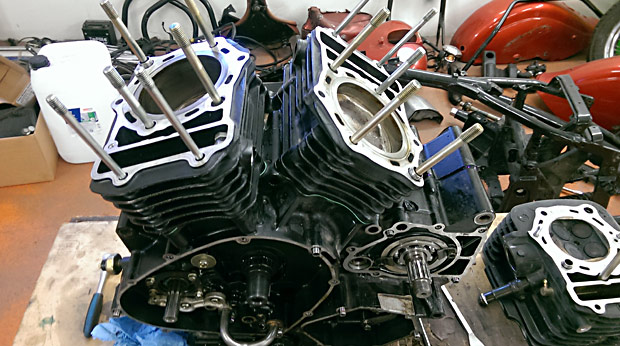
Engine & Gearbox

The engine is removed and stored separately. Drain the oil first!

The Project

The Kawasaki VN800 Drifter – a real gem in Indian style. After many years on the road, it needs a complete restoration.

In this episode the big adventure begins: Everything has to come off! Tank, fairings, engine, wheels – piece by piece the machine is disassembled.

2

Tank & Fairings

First, the tank and all fairing parts come off. Store screws and small parts in labeled bags.

Pro Tip

Use magnetic screw trays and label everything! A smartphone video of the disassembly can be worth gold during reassembly.

Repair Rust and Rust Holes on Your Car

▶️ Repair Rust and Rust Holes on Your Car

Professionally treat rusted areas, fill and paint

▶️
Difficulty
Challenging
⏱️
Time
5-8 Hours
▶️
Cost
€200
▶️
Savings
€1000
▶️
Tools
Grinder, Hand Tools

Video Tutorial Step by Step

▶️ Matching Product for This Video

[dasauto_product id=”368831″]

The Problem

Eye-catching, perforated, large-scale rusted body. Nobody wants to drive it anymore, but nobody wants to throw it away either because the car is technically still in good shape.

⚠️ Warning

Rust holes on load-bearing parts such as sills, underbody struts and longitudinal members must never be filled with filler. These damages must be welded by a professional.

Here’s How:

1

Remove Rust

Get rid of the rust and repair the body yourself.

Completely remove rust, protruding loose metal parts and flaking paint layers. Wrap dry sandpaper – coarse grit P60 – around a sanding block and sand the rusted areas down to bare metal over a large area.

Not a bit of rust must remain visible on the car. Where there was rust before, it must now shine brightly!

Then clean the area very thoroughly with silicone remover.

▶️ Pro Tip

It’s easier and faster with a grinder or cordless drill with attachment. This works great, is more fun and saves enormous time. Three minutes with the grinder saves 20 minutes of tedious manual work. Protect all parts that should not be sanded with masking tape.

2

Filling

Fiber filler can now be applied to the shiny, perfectly sanded and silicone remover-cleaned area.

Fiber filler (filler with polyester fibers) adheres superbly to metal and is stable on its own due to the fine fibers.

Here’s how: Spread fiber filler on a piece of cardboard and add hardener. The correct dosage is important. If you use too much hardener, the filler sets too quickly and can no longer be worked, if you use too little, it won’t cure. Max shows you how to do it right in the video.

Apply the filler generously over the perforated area.

3

Sanding

After 30 minutes the filler has cured and you can sand off the excess filler dry with coarse sandpaper, restoring the original shape of the body.

Protect everything that shouldn’t be primed and painted from overspray again!

Simply use masking paper and masking tape (see video).

4

Fine Work

After everything is sanded flat, level any remaining craters and sanding marks with filler or spray filler.

Shake the spray can long and vigorously until the components in the can are well mixed (about 5 min). The small ball in the can must move easily and freely.

Attach the handle to the can. It works like a spray gun and makes the work much easier.

⚠️ Warning

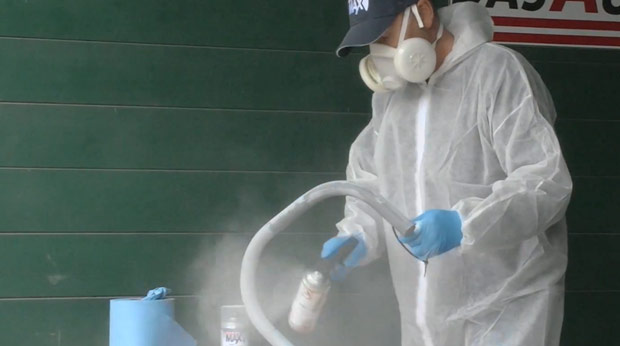
Primer, filler and paints are harmless according to manufacturers, but certainly not meant for the lungs – so always wear a protective mask!

5

Priming

Now spray the filler in several thin coats (3-5). Let it flash off for 2-3 minutes between spray passes.

The ideal spray distance is 30 cm, the ideal temperature 15 to 20 degrees.

30 minutes after the last spray pass, the filler has cured and the excess can be sanded off with wet sandpaper (P500), sponge and a bucket of water (see video).

Careful work is very important here, all unevenness must be sanded flat.

Feel is important! Don’t sand through to filler or metal, otherwise these areas need to be primed again.

6

Painting

Once the primer is applied, dry (after about 20 min) and sanded, it’s finally time for paint on the metal!

Shake the paint spray vigorously for 5 minutes until the ball is audibly hitting and everything is well mixed. Attach the handle and apply several thin coats.

The ideal spray distance is 30 cm, the ideal temperature 15 to 20 degrees.

Caution! Don’t spray too much at once, otherwise you’ll get runs… In the video, Max shows step by step how to do it right.

7

Clear Coat – Top Coat

After about 30 min. drying time, the clear coat goes over the paint layer.

Shake the clear coat well too and apply in several thin coats (should be at least 5), letting it flash off after each spray pass.

The clear coat protects the metallic particles from oxidation, gives the paint gloss, and is absolutely necessary as a protective layer.

Caution! With solid colors, no clear coat is required. If unsure, email info@dasauto.at or call the hotline.

8

Almost Done

From the outside, your car is now back in top shape, but on the inside of the bare-sanded areas, the metal is now susceptible to new rust.

Therefore, you must absolutely preserve this area.

Very good results are achieved with cavity wax. Cavity wax is the simple, ideal solution for preservation and cavity protection.

After about 1 hour of drying time, the clear coat is hard enough to remove the masking paper.

…and – Voila! The result speaks for itself!

9

Done?

If you now find small edges or transitions in the paint, that’s no problem: After 2 to 3 days the clear coat is completely cured and the edge is simply carefully removed with P2000 wet sandpaper and then polished to a high gloss.

Of course, you’ll now polish the entire car and preserve it with hard wax.

▶️ Important

Rust always spreads underneath the paint. Remove more than you see – rust must be 100% gone!

Need supplies?

Shop Now →

Polishing and Waxing with Machine

✨ Polishing and Waxing with a Polisher

Restore shine and protect your paint

▶️
Difficulty
Easy-Medium
⏱️
Time
2-4 Hours
▶️
Cost
€30-80
▶️
Savings
€200-500 vs. Detailer
▶️
Tools
Polishing Machine

▶️ Video Tutorial

▶️ Matching Product for This Video

[dasauto_product id=”368402″]

Why Polish?

Over time, car paint loses its shine due to UV rays, bird droppings, tree sap, and environmental pollution. Polishing removes the damaged top layer of clear coat and reveals fresh, glossy paint underneath.

Waxing then protects this fresh surface from new damage.

Here’s How:

1

Wash Thoroughly

Start with a thorough wash. Remove all dirt, insects, and tar. The surface must be perfectly clean before polishing – any particles can cause scratches during the polishing process.

2

Clay Bar Treatment (Optional)

For heavily contaminated paint, use a clay bar to remove embedded contaminants. The paint should feel smooth as glass afterwards.

3

Polishing Compound

Apply a small amount of polishing compound to the pad. Work section by section – about 50x50cm at a time. Start with medium speed and light pressure.

Keep the polisher moving! Never stay in one spot too long.

4

Fine Polish

After the compound, switch to a softer pad and finer polish. This removes the light haze left by the compound and brings out maximum gloss.

5

Wax or Sealant

Apply wax or paint sealant with a soft applicator or machine. Let it haze, then buff off with a clean microfiber cloth. This protects your work for months.

⚠️ Warning

Don’t stay in one spot – you can burn through clear coat! Keep the machine moving at all times. Start with the least aggressive compound and pad combination.

▶️ Pro Tip

Work in the shade or garage – direct sunlight causes products to dry too fast. Temperature should be between 15-25°C for best results.

Recommended Polishing System:

Step 1: Cutting compound with firm pad – removes defects

Step 2: Fine polish with soft pad – refines finish

Step 3: Wax/sealant with foam applicator – protects

Need supplies?

Shop Now →