Repair Scratches on Car Paint

✨ Repair Scratches on Car Paint

Remove scratches and restore the shine

▶️
Difficulty
Easy
⏱️
Time
30-60 min
▶️
Cost
€20-50
▶️
Savings
€200-400
▶️
Tools
Polisher/By Hand

▶️ Video Tutorial

▶️ Matching Product for This Video

[dasauto_product id=”368868″]

⚠️ The Problem

Scratches on car paint are annoying and lower the value of your vehicle. But not every scratch requires expensive professional repair. Many scratches can be removed yourself with the right technique!

Types of Scratches:

Clear Coat Scratches: Only the clear coat is affected. These scratches can usually be polished out completely.

Base Coat Scratches: The color layer is damaged. Touch-up and polishing required.

Deep Scratches: Down to metal. Requires complete repair with primer, paint, and clear coat.

▶️ Quick Test

Wet the scratch – if it disappears when wet, it’s a clear coat scratch and can be polished out!

Here’s How:

1

Clean the Area

Thoroughly wash and clean the scratched area. Remove all dirt, wax, and silicone residues. Use silicone remover for best results.

2

Assess the Damage

Run your fingernail across the scratch. If it catches, the scratch is deeper. If it slides smoothly, it’s likely just a clear coat scratch.

3

Polish with Compound

Apply polishing compound to a microfiber cloth or polishing pad. Work in circular motions with moderate pressure. The compound gently removes a thin layer of clear coat, eliminating the scratch.

4

Fine Polish

After the compound, use a finer polish to restore the gloss. Work in the same way – circular motions, moderate pressure.

5

Seal and Protect

Apply wax or sealant to protect the polished area. This step is essential – the polished surface is now more vulnerable without protection.

⚠️ Warning

Don’t polish too aggressively! Each polishing session removes a small amount of clear coat. On older cars with thin clear coat, be especially careful.

▶️ Pro Tip

A machine polisher makes the job faster and easier, but requires practice. For beginners, polishing by hand is safer – it’s harder to damage the paint.
Need supplies?

Shop Now →

Repair Foggy Headlights

▶️ Repair Foggy Headlights

Restore yellowed headlights yourself

▶️
Difficulty
Easy
⏱️
Time
2 Hours
▶️
Cost
€55
▶️
Savings
Up to €2000
▶️
Tools
Sanding Tools

▶️ Video Tutorial

▶️ Matching Product for This Video

[dasauto_product id=”368836″]

⚠️ The Problem

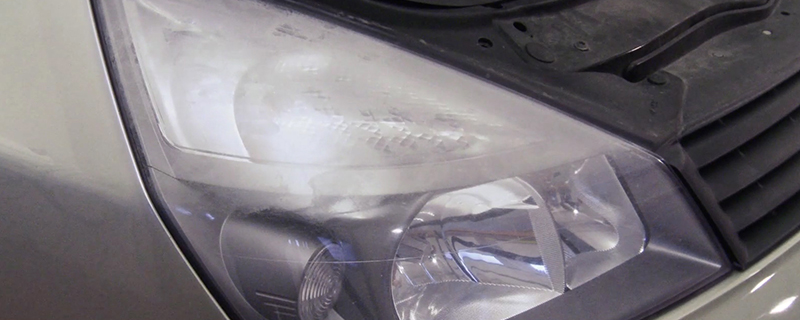
Stone chips, UV light, salt, insects and weather effects cloud and scratch the plastic covers on modern headlights. Poor light significantly increases the risk of accidents, harms the appearance, and the cloudy matte lens won’t pass safety inspection.

Foggy headlights – Since headlights on almost all modern vehicles are either glued or manufactured as one piece, the covers cannot be replaced. New headlights can cost a lot of money, especially with xenon and cornering lights, one headlight costs up to €1,000. Add installation and adjustment work. DasAuto Easy Repair has developed a way to repair yellowed headlights yourself, cost-effectively and without much effort, even without technical knowledge.

Here’s How:

1

Preparation

The first step is to protect the adjacent body parts with masking tape so that the paint is not damaged during sanding. All painted parts must be very carefully masked off.

2

Sanding and Cleaning

With a large sponge, lots of water and wet sandpaper – grit P800 – the yellowed and cloudy protective layer is sanded off. This is very easy and quick as the damaged protective layer is easily removed.

Always rinse with plenty of water in between.

You get the perfectly clear cover by final fine sanding with lots of water and wet sandpaper – grit P2000. This is no magic either: With circular motion and light pressure, the entire cover must be sanded evenly.

3

Masking

Now you need to mask off. Masking is worth it because it’s much more tedious to remove paint from the fender, bumper, grille and engine bay later.

Thorough cleaning is necessary to remove grease and silicone as well as sanding particles.

A lint-free cloth and a cleaner specially developed for plastic allow a residue-free surface.

4

Priming

For the clear coat applied later to remain robust and durable, the cover must be primed with plastic primer.

This primer is important because it creates a stable bond for the clear coat on the plastic.

A thin layer of primer is sufficient and is dry and ready for overcoating after 30 minutes.

⚠️ Warning

Shake the can vigorously for 3 min from the audible impact of the balls. This ensures optimal mixing with the hardener. Use the handle again, it makes painting easier.

▶️ Pro Tip

2K (2 component) clear coat is significantly more durable and resistant than 1K (1 component) clear coat.

Plastic primer is absolutely necessary. The primer ensures a compact and long-lasting bond between clear coat and headlight. Without primer, the clear coat will peel off and the work was in vain.

5

Painting

We recommend the 2K 2in1 Headlight Clear Coat. This special 2K clear coat was developed for the subsequent protective coating of polycarbonate lenses.

This clear coat is significantly more durable and resistant than many other products offered.

In this 2K clear coat, the hardener is integrated in a separate cartridge in the spray can. The hardener is released by pressing a button and mixes by shaking in the can. The 2-component system is particularly robust and resistant to scratches and weather influences and guarantees the highest product quality.

Spray the first thin coat with even movements and let it dry for four to five minutes. Finally, apply a second generous coat for full coverage.

▶️ New Product

The headlight clear coat has been further developed by the manufacturer and combined with a plastic primer. Primer & clear coat are now applied in one spray pass. No more plastic primer needed!

⚠️ Warning

Don’t apply too thick, otherwise the paint will run and form ugly drips.

6

Done

The headlights are like new and pass every safety inspection. Perfect light, perfect appearance, repaired yourself and saved a lot of money in the process.

Need supplies?

Shop Now →

Spot Repair – Partial Paint Repair

▶️ Spot Repair – Partial Paint Repair

Professionally repair small paint damage without complete repainting

▶️
Difficulty
Medium
⏱️
Time
2-4 Hours
▶️
Cost
€50-100
▶️
Savings
€300-600 vs. Body Shop

Video Tutorial

▶️ Matching Product for This Video

[dasauto_product id=”368832″]

The Problem

Larger scratches, parking damage, or small dents with paint damage require more than just a touch-up pen. The damaged area must be prepared and repaired with spray paint.

With Spot Repair, only the damaged area is painted – not the entire part. This saves time and money!

Here’s How:

1

Preparation

Thoroughly clean the damaged area with silicone remover. Remove loose paint and sand the edges with 800 grit sandpaper.

2

Priming

For areas down to bare metal: First apply rust protection primer, then filler. Let it dry well and sand.

3

Masking

Generously mask off the surrounding area. Use masking film and painter’s tape. The transitions should be able to blend softly.

4

Spraying Base Coat

Apply the base coat in 2-3 thin layers. Let it flash off for 5-10 minutes between coats. Spray distance approx. 20-25 cm.

⚠️ Warning

Don’t apply too thick! Better multiple thin coats than risking runs. With metallic paints, pay attention to consistent spray distance!

▶️ Pro Tip

Work in a dust-free environment at 15-25°C temperature. Avoid direct sunlight! Best to work in the garage with the door open.

5

Applying Clear Coat

After 20-30 minutes of flash-off time, apply 2K clear coat in 2-3 layers. The clear coat provides gloss and protection.

6

Finishing

After 24h drying time, you can polish out any dust inclusions with 2000 grit sandpaper (wet) and polishing compound.

Need supplies?

Shop Now →

Paint Plastic Parts with Spray Paint

▶️ Paint Plastic Parts with Spray Paint

Bumpers, mirrors, spoilers and fender flares – paint them professionally

▶️
Difficulty
Easy
⏱️
Time
3 Hours
▶️
Cost
€150
▶️
Savings
€500
▶️
Tools
None Required

Video Tutorial – Complete Plastic Painting

▶️ Matching Product for This Video

[dasauto_product id=”368834″]

The Problem

Parts like fenders, bumpers, mirrors, spoilers, and flares made of plastic that are replaced or added only look good when they are painted to match the car.

This is also possible without a professional spray gun – simply with dasAuto paint sprays.

Here’s How:

1

Preparation

The plastic part must be checked for exact fit, any manufacturing defects, storage or transport damage must be repaired and adjusted.

Plastic parts that have not been primed by the manufacturer should be carefully sanded with P800 wet sandpaper and thoroughly cleaned with silicone remover. Manufacturers use special solvents to help plastic parts release from the mold more easily. These solvents do not mix well with primer, filler and paint. Thorough cleaning prevents later problems.

▶️ Pro Tip

Create a dust and insect-free environment. If you work in the garage, the floor should be wet to avoid dust.

If you paint outdoors, it should be completely windless. The earlier in the morning, the fewer insects that might land on the freshly painted surface.

If it does happen, remove the insect with tweezers while the paint is still wet. The paint will level out and correct the mistake on its own.

2

Priming and Re-sanding

Apply two coats of plastic primer to the sanded and cleaned plastic part and let it flash off.

After 20 minutes of drying time, the plastic part is – depending on condition – ready for filler or final painting.

Take your time – the more thoroughly you sand, the better the result.

▶️ Pro Tip

To avoid missing any spots when sanding, professionals use guide coat. This way you can immediately see where you’ve already sanded and where you haven’t.

3

Painting

Once the filler is applied, dry (after about 20 min) and sanded, it’s finally time for paint!

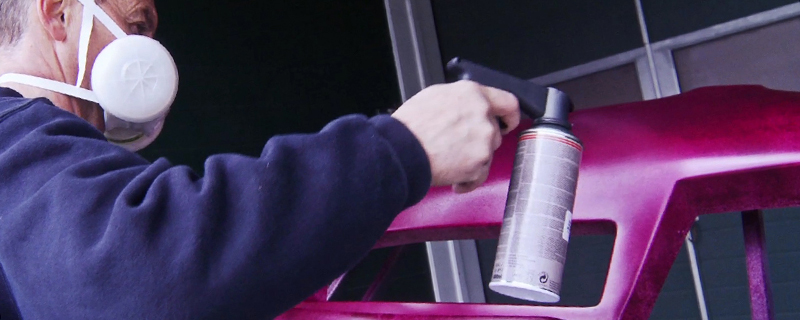
Shake the paint spray vigorously for 5 minutes until the ball is audibly hitting and everything is well mixed. Attach the handle, spray the first thin coat (tack coat) and let it flash off for 3 minutes.

Then apply the paint in further thin coats until you have a nice, evenly covering paint layer. Always allow 3 minutes of flash-off time between coats.

The ideal spray distance is 30 cm, the ideal temperature 15 to 20 degrees.

⚠️ Warning

Don’t spray too much at once, otherwise you’ll get runs… In the video, Max shows step by step how to do it right.

4

Clear Coat – Top Coat

After about 30 min. drying time, the clear coat goes over the paint layer.

Shake the clear coat well and apply in 3-5 thin coats, allowing it to flash off after each spray pass.

The clear coat protects the metallic particles from oxidation, gives the paint gloss, and is absolutely necessary as a protective layer.

⚠️ Warning

With solid colors, no clear coat is required. If unsure, email info@dasauto.at or call the hotline (+43 (0) 3687 24515 during business hours).

5

Done?

If you now find small edges, transitions or runs in the paint, that’s no problem:

After 2 to 3 days the clear coat is completely cured and the edge is simply carefully removed with P2000 wet sandpaper and then polished to a high gloss.

Of course, you’ll now polish the entire car and preserve it with hard wax. High gloss and high spirits! Congratulations!

Need supplies?

Shop Now →

Paint Sheet Metal Parts with Spray Paint

▶️ Paint Sheet Metal Parts with Spray Paint

Paint fenders, doors, and other metal parts yourself like a pro

▶️
Difficulty
Medium
⏱️
Time Required
3-5 Hours
▶️
Cost
€50-120
▶️
Savings
€300-800 vs. Paint Shop

Video Tutorial

▶️ Our SET for You

[dasauto_product id=”368835″]

The Problem

Damaged sheet metal parts like fenders, doors, hoods, or trunk lids need to be repainted after accident repair, rust treatment, or replacement.

With the right technique and quality materials, you can achieve professional results in your own garage! Save hundreds of euros compared to professional paint shops.

Step-by-Step Instructions:

1

Surface Preparation

Clean the part thoroughly with silicone remover. Repair old paint damage, treat rust spots, fill uneven areas with body filler. This step is crucial – any contamination will cause problems later!

2

Sanding

Sand the entire old paint surface with 400 to 600 grit sandpaper to create a matte finish. This gives the new paint proper adhesion. Then remove dust and degrease the surface completely.

3

Priming (if needed)

On bare metal or after filler work: Apply filler/primer and sand smooth (600 grit) after drying. Wait at least 12 hours before final sanding with P800.

4

Apply Base Coat

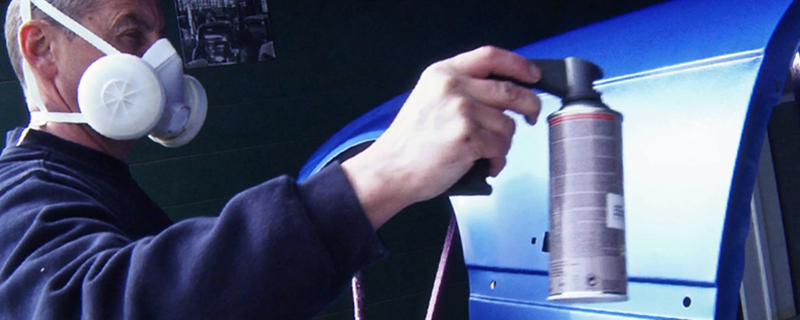
Spray base coat in 2-3 thin, even layers. Keep spray distance at 20-25 cm, use cross-coat technique (horizontal, then vertical passes). Let flash off 5-10 minutes between coats.

Warning

Always spray evenly and keep the can moving! Never stay in one spot – that causes runs and drips. Better to apply multiple thin coats than one thick one! If you see runs forming, stop and let it dry before sanding and repainting.

5

Apply Clear Coat

After 20-30 minutes flash-off time from the base coat, apply 2K clear coat in 2-3 layers. The clear coat provides gloss, depth, and essential UV protection for long-lasting results.

6

Drying & Polishing

Let dry for at least 24 hours – ideally 48 hours in a warm, dust-free environment. Polish out any dust inclusions with 2000 grit wet sandpaper and polishing compound for a perfect finish.

Pro Tip

Room temperature should be between 15-25°C (60-77°F). No direct sunlight! For best results, warm the spray cans in lukewarm water (not hot!) before use – this creates finer atomization for a smoother finish. Also, always do a test spray on cardboard first!

Need supplies?

Shop Now →

Blechteile mit Lackspray lackieren

Blechteile mit Lackspray lackieren

Neuer Kotflügel

Das Problem: Teile wie Kotflügel, Stoßstangen, Spiegel, Türen, sowie Spoiler, Verbreiterungen, Felgen etc., die ersetzt oder angebaut werden, schauen nur dann gut aus, wenn sie zum Auto passend lackiert werden. Das geht auch ohne Profi-Lackierpistole ganz einfach mit dasAuto Lacksprays.
Schwierigkeit:
einfach;
Zeitaufwand:
2h;
Kosten:
70€;
Ersparnis:
300€;
Zusätzliches Werkzeug:
Keines;
– SET für Sie: Film Set Ganzlackierung

Matter stumpfer Lack am Heckspoiler

Das Problem:  Teile wie Kotflügel, Stoßstangen, Spiegel, Türen, sowie Spoiler, Verbreiterungen, Felgen etc., an denen der Lack bereits abgestumpft ist und nicht mehr Aufpoliert werden kann, werden mit einer Neulackierung mit dasAuto Lacksprays wieder zu neuem Glanz erweckt.
Schwierigkeit:
mittel;
Zeitaufwand:
3h;
Kosten:
70€;
Ersparnis:
300€;
Zusätzliches Werkzeug:
Keines;
– SET für Sie: 2K Reparaturset
Und so geht`s:
Vorbereitung
Das neue Blechteil muss auf Passform genau geprüft werden, eventuelle Verarbeitungsfehler, Lager- bzw. Frachtschäden ausrichten und anpassen.
Das alte Blechteil mit stumpfen Lack muss am Rande gründlich abgeklebt werden, damit beim Schleifen und Lackieren die benachbarten Bereiche nicht beschädigt werden.
Profi Tipp:Staub- und Insektenfreie Umgebung schaffen. Wenn Sie in der Garage arbeiten, sollte der Boden nass sein, um so Staub zu vermeiden.
Wenn Sie im Freien lackieren, sollte es unbedingt windstill sein, je früher am Morgen, desto weniger Insekten, die sich auf die frisch lackierte Fläche setzen.
Sollte es dennoch passieren, das Insekt mit Pinzette entfernen solange der Lack noch nass ist. Der Lack spannt sich aus und korrigiert den Fehler ganz von selbst.
Schleifen, Grundieren und wieder Schleifen
Die Schutzgrundierung, die vom Hersteller als Rostschutz während der Lagerung und des Transports meist sehr unregelmäßig aufgetragen wurde, muss gründlich angeschliffen werden.
Ebenso muss der alte stumpfe Lack gründlich angeschliffen werden.
Auf die geschliffene und mit Silikonentferner gereinigte Fläche Grundfüller in zwei dünnen Schichten deckend lackieren.
Zwischen den Spritzgängen fünf Minuten ablüften lassen. Nach 20 Minuten ist das Teil trocken und kann jetzt geschliffen werden.
Mit Wasserschleifpapier Körnung P600 oder feiner die Grundierung schleifen.
Lackieren Ist der Grundfüller aufgetragen, trocken  (nach ca. 20 min) und geschliffen, kommt mit dem Lackspray endlich Farbe ins Spiel!
Den Lackspray 5 Minuten kräftig schütteln, bis die Kugel hörbar anschlägt und alles gut vermischt ist.  Handgriff aufstecken erste dünne Lackschicht (Klebeschicht) aufsprühen und 3 Minuten ablüften lassen.
Dann in weiteren feinen Schichten den Lack auftragen bis Sie eine schöne gleichmäßig deckende Lackfarbe haben. Immer jeweils 3 Minuten Lüftzeit zwischen den Schichten beachten.
Der ideale Spritzabstand beträgt 30 cm, die Idealtemperatur 15 bis 20 Grad.
Achtung! Nicht zuviel auf einmal aufsprühen, sonst gibt es Tränenbildung des ablaufenden Lackes… Im Film zeigt Max Schritt für Schritt, wie’s richtig gemacht wird.
Klarlack – Decklack  Nach ca. 30 min. Trocknungszeit kommt der Klarlack über die Lackschicht.
Auch den Klarlack wieder gut schütteln und in 3-5 Schichten dünn auftragen und nach jedem Spritzgang ablüften lassen.
Der Klarlack schützt die Metallic-Teilchen vor Oxidation, er lässt den Lack glänzen und ist als Schutzschicht unbedingt notwendig.
Achtung! Bei Unilacken ist kein Klarlack erforderlich. Bei Unsicherheit entweder e-mail an info@staging.mountaingolf.eu oder die Hotline anrufen (+49 8505 919 333 während der Geschäftszeiten).
Fertig ?  Sollten Sie jetzt noch irgendwo kleine Kanten, Übergänge oder Tränen im Lack finden, dann ist das auch kein Problem: Nach 2 bis 3 Tagen ist der Klarlack komplett ausgehärtet und die Kante wird einfach mit Wasserschleifpapier P2000 sehr vorsichtig abgenommen und anschließend auf Hochglanz poliert.
Natürlich werden Sie jetzt das ganze Auto polieren und mit Hartwachs konservieren. Hochglanz und Hochstimmung! Gratulation!